- Solutions
- The Company
- About usCartrack offers smart fleet solutions guaranteed to optimise your fleet and workforce, no matter how big or small your business.
- Investor RelationsCartrack has a history of strong cash flow generation and cash conversion, low financial leverage and strong dividends.
- CareersCareers portal. View all the current Cartrack career openings and opportunities available.
- Resources
- Contact Us
- Login
Managing Maintenance Costs in Your Fleet Company
Future IoT published a comprehensive article about the adoption of fleet management systems in Southeast Asia. Among the countries surveyed, the Philippines was one, and this article predicted that by 2029, 27.1% of fleets in Southeast Asia will have some form of FM system in place.
This growth toward fleet technology is slow because it seems the main benefits aren’t perfectly understood by all fleet managers. Many believe the only benefits of FMS are operational speed & convenience, completely missing the fact that fleet software actually SAVES money in various ways.
One of those ways is maintenance costs! This one expense seems to affect the Philippines’ fleet operators especially hard, for reasons we’ll dive into later.
In this article we’ll show you that streamlining your fleet operations ISN’T the only reason to implement fleet software—it’s also a huge money saver, especially against vehicle maintenance costs!
Key takeaways
-
Proactive care saves money: You’ll cut down your fleet expenses by using smart technology to catch vehicle issues before they turn into expensive breakdowns.
-
Delays cause expensive downtime: Putting off regular service bookings to save a quick buck always ends up costing you much more in the long run.
-
Manual scheduling is a waste of money: You can stop drowning in confusing spreadsheets because automated software takes the guesswork out of vehicle upkeep.
-
Healthy fleets protect your brand: Keeping your vehicles in top shape means you’ll seldom let your customers down or give way to your competitors.
What are fleet maintenance best practices for reducing costs?
To reduce costs in fleet maintenance, the word PROACTIVE should be at the forefront of your mind. This involves preventing problems rather than waiting for them to happen and dealing with them in a reactive way. Fleet maintenance is cheaper when it’s done through vehicle health monitoring rather than with a last-minute repair approach.
List of fleet maintenance best practices:
-
Monitor your vehicles’ health using AI-driven fleet technology
-
Save money by only servicing vehicles that need it
-
Service vehicles BEFORE they break down (maintain rather than repair)
-
Maintain a dynamic servicing schedule to keep operations moving
-
Train your drivers on driving habits that extend the life of your vehicles
If you ask a fleet manager why they haven’t adopted fleet management technology yet, the answer is often the same: “We just don’t have the money at this point.” This answer is ironic, because FM systems aren’t just about simplifying the duties of a fleet manager; they’re about saving companies the same money they claim a shortage to.
Nowhere is this more true than in vehicle maintenance. It’s expensive to service vehicles—especially in the Philippines. Don’t you think it’s time to save on these costs?

Why does maintenance cost so much in the Philippines?
There are certain country-specific factors that contribute to a higher rate of wear & tear on vehicles, and these include traffic congestion, delaying service schedules, and lack of fleet visibility. To be an insightful fleet manager, it’s recommended that you educate yourself on these factors.
Here’s what you need to know.
Manila Metro congestion: Traffic challenges
Metro Manila homes over 14 million people, according to an article published by the Manila Bulletin in 2025. Peak hours of traffic make it difficult to navigate, and drivers do a lot of waiting. This means they experience a lot of vehicle idling and sometimes feel they need to take road risks to get to work on time.
Fleets struggle with this reality because their vehicles idle excessively. This results in very little vehicle movement to justify the wear & tear this idling inflicts on their vehicles (not to mention the exorbitant fuel costs).
Fleet manager mindset: Making money vs spending money
Oftentimes, fleet managers delay booking their vehicles in for maintenance because of the immediate costs. What they’re NOT taking into account is what these delays will cost them LATER.
If you had a choice of booking your vehicle in for maintenance today or booking it in for an emergency repair next week, which would YOU choose?
The answer to this question can hypothetically mean the difference between 24 hours and 3 days of downtime. Obviously one is way more expensive than the other!
Guesswork: Blind vehicle usage metrics
Another reason why fleets in the Philippines are paying more for maintenance is that they have little-to-no idea what the current state of their vehicles is. They’re not checking tyres, clutches, or engines because they don’t know whether they even should.
If you thought the only way to check the state of your vehicle's components was taking that vehicle to a mechanic, keep reading.
Because here’s a FACT: A fleet manager can know exactly what’s wrong with a vehicle long before a mechanic identifies it.
Data fatigue: Scattered vehicle health data in fleets
Some fleet managers DO have fleet maintenance software. But the data is so muddled and hard to understand, important decisions are often missed. If data isn’t interpreted properly, it can’t be actioned.
When was the last time you ACTUALLY understood enough about your fleet to make a calculated decision?
Time-consuming fleet management: Manual service schedules
Vehicle maintenance tends to be a time-consuming part of managing a fleet. It’s not just about cost—it’s often about time. And time is money! Because maintenance scheduling is done manually, it involves tedious tasks that fall to the fleet manager—something they simply don’t always have time for.
If your fleet management software isn’t AUTOMATING service schedules, is it really worth having?
But if you thought fleet maintenance was costing you a lot of money, you might be shocked to learn how much it costs you to NOT maintain your fleet optimally. As we dive deeper into this topic, ask yourself what the real-life effects of poor fleet maintenance are having on:
-
your profit margins,
-
the safety of your drivers,
-
and your brand reputation.
What are the REAL effects of poor fleet maintenance methods?
By neglecting a sound maintenance strategy in your fleet, you open up your business to a bunch of other vulnerabilities. It won’t be long before your customers, your stakeholders, and even your staff start noticing these problems.
Fleet downtime
Downtime in your fleet is unavoidable. The question is, how can you minimise it as much as possible? When you don’t focus on proper fleet maintenance scheduling, downtime WILL increase. This is arguably the biggest fleet expense, not just because you’re not servicing customers, but also because your reputation suffers in the long run.
A single breakdown can cost more than just repairs—it disrupts your entire operation.
Reputational knocks
The long-term effects of letting your customers down are what’s really devastating. You begin to develop a reputation of unreliability. With so many competitors vying for your clients, keeping up with schedules and deadlines is vital.
Become your industry’s go-to fleet company by always making good on your promises. Protect your reputation and don’t give your competitors an opportunity to show you up.
Lower productivity
You’ll quickly notice the lack of a good maintenance strategy in your productivity stats. Fewer jobs will get done because you’re always putting out broken-down-vehicle fires. Based on the stats we mentioned earlier, fleet managers in the Philippines seem to be apprehensive about AI fleet technology, and they’ll soon pay the price months down the line.
Maintenance management software delivers a brilliant ROI, and that return usually shows up in long-term productivity numbers.
New vehicle costs
Looking at the distant future is something few fleet managers are doing these days. Vehicle longevity plays a HUGE role in keeping your fleet profitable. Replacement vehicles cost money, so the longer you can hold off those new vehicle purchases, the BETTER.
Don’t just think about this month’s numbers. Project your fleet success way into the future by looking after your vehicles NOW!
Idle staff
You pay your staff whether they’re working or not. When vehicles are down, your staff get paid for sitting on the sidelines. Have you worked out what this is actually costing you?
Keep your staff productive and get the most out of your salary budget. A good fleet maintenance strategy is where the bulk of your profits can be salvaged.
How does technology help to optimise fleet maintenance?
Some technology has a very direct way of optimising the maintenance strategy of your fleet, while other forms of tech are more remote in their positive effects. In order of effectiveness, here’s how combined technology makes all the difference in maintaining vehicles optimally.
-
IoT (Internet of Things) devices installed to your vehicles that give you real-time diagnostics on your engine, tyres, clutch, brakes, and electronics.
-
Predictive AI software that uses that same IoT data to notify you when a vehicle component needs maintenance.
-
Automatic scheduling that books your vehicles in when necessary, while simultaneously planning stand-in vehicles to minimise downtime.
-
Baseline FMS features that reduce overall vehicle wear & tear (thereby minimising the need for maintenance):
-
Optimising routes to keep vehicles on the quickest, safest routes
-
Driver monitoring to ensure good driving habits
-
Driver coaching to enforce those habits and incentivise good driving
-
So what are the results?
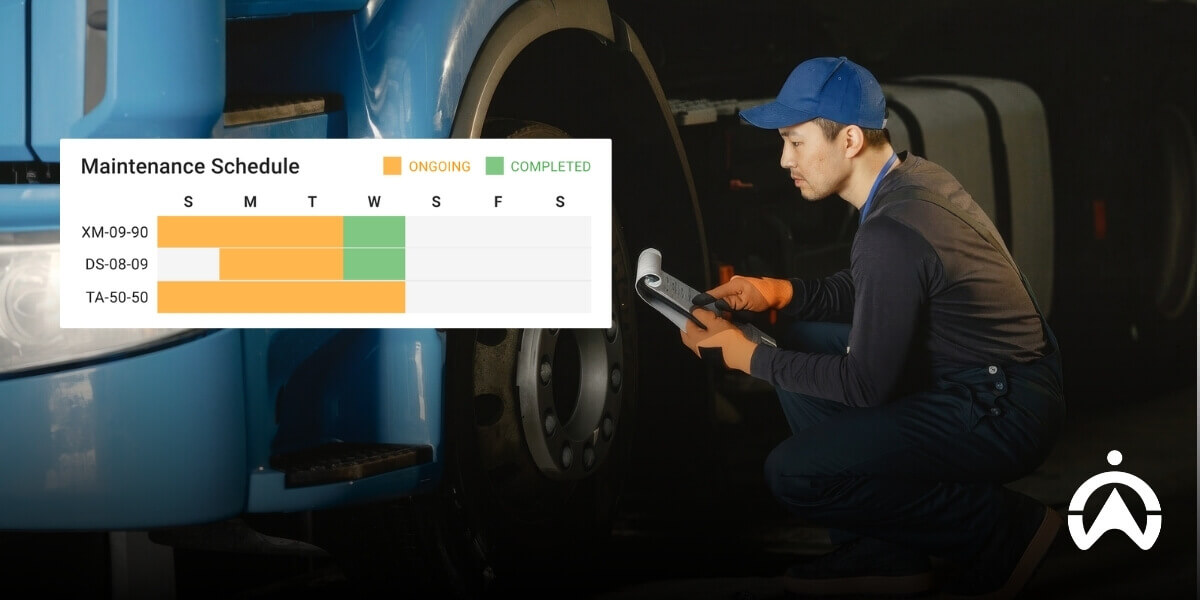
Cost-saving results of a fleet maintenance software strategy
The results will quickly become evident. Repair costs will go down, your vehicles won’t break down as often, and your customers will get the service they so desperately rely on. You’ll optimise company resources and begin to see positive reports in your financial overviews.
Here’s what you can expect when you implement an AI-driven approach to fleet vehicle maintenance.
Lower repair costs
If you’ve got your vehicles on a set maintenance schedule, chances are you’re wasting money. Not every vehicle in your fleet actually needs a visit to your mechanic, but you wouldn’t know that unless you… well, took it to the mechanic!
At Cartrack we take a “Don’t fix what ain’t broke” approach to maintenance. ONLY vehicles that need maintenance are booked in. If the vehicle is healthy, why waste money on expensive service costs?
Not only does this reduce repair costs, it also focuses repairs on the vehicles that actually need it, freeing up time and keeping as many vehicles on the road as possible.
Fewer emergency breakdowns
With a strong focus on breakdown prevention, we believe that prevention is better than cure when it comes to keeping vehicles healthy. Cartrack’s fleet maintenance software tackles the inevitable costs that come with extended down time by nipping small mechanical issues in the bud before they turn into expensive fixes.
Less downtime
With your healthy vehicles consistently on the road, your customers begin to perceive you as a reliable logistics company. You get more contracts, and you’ll keep the ones you’ve already got. Keeping your customers happy is how you directly impact your profits over time.
Better resource management
If your fleet is currently strapped for resources, could it be that you’re not optimising the utilisation of those resources as well as you could? By keeping your staff, vehicles, and money all where they belong, you free up resources for growth and better efficiency.
That’s how the best fleets in the Philippines are doing it—and you can adopt the same strategy when it comes to maintenance costs within your fleet.
What’s the best vehicle maintenance software in the Philippines?
The best vehicle maintenance software for your fleet depends on your vehicle setup and your goals. Cartrack meets challenges that are specific to the Philippines HEAD ON, which is why we’re considered a top fleet software provider across 24 countries.
But as we pointed out earlier, it’s not just about direct maintenance management.
Small changes make a big difference: We also provide solutions that indirectly reduce your maintenance, like route optimisation, driver accountability, and enforceable safety protocols.
Keep it all central: If you combine our predictive AI maintenance strategy with other Cartrack features, you get everything on one portal. We minimise data fatigue and give you the simplest ways to save on maintenance costs—all the while increasing the longevity of your vehicles.
Speak to a Cartrack consultant about managing your maintenance the smart way. Keep costs down, boost your reputation, remain competitive, and save time throughout your daily operations.
Frequently asked questions about managing fleet maintenance costs
How does maintenance software alert me to tyre issues?
Vehicle maintenance software identifies tyre issues using an IoT device called a Tyre Pressure Monitoring System (TPMS). If the pressure is low or inconsistent with other tyres, you as the fleet manager will be alerted on your phone or PC so that you can examine the tyre in question and take action.
What devices are used to monitor vehicle health?
A common device used to monitor vehicle health is the CAN bus clamp. It connects directly to your vehicle’s central electronic system and provides vehicle readings which are sent to the software platform. From here, AI makes sense of the data and alerts you to anything that needs your immediate attention.
Do I need a GPS tracker to optimise fleet maintenance?
Yes, to get the most out of any fleet maintenance software, a tracking device is ideal. That’s because vehicle diagnostics need to be compared to factors like location, distances travelled, and general scheduling. By combining logistics schedules with vehicle health, an accurate servicing recommendation can be made.



 Select Countries